Glamping photos make it look like an easy, affordable upgrade from camping: a cozy bed, a wood stove, a view of the hills. Then you start checking prices and find one site charging $90 a night while another asks $700 for what looks like the same tent. That spread is real, and it makes budgeting for a first glamping trip surprisingly confusing.
This guide breaks down the typical glamping cost at every level, from simple bell tents to full-service luxury resorts. We cover what drives prices up or down, the hidden fees that quietly inflate your bill, and practical ways to save when you book. You’ll also find sample budgets for couples, families and solo travelers, plus an honest comparison against hotels so you can decide whether glamping is worth it for your next trip.
What Is the Average Glamping Cost per Night?
Glamping prices fall into four broad tiers, and knowing which one you’re shopping for makes comparing sites much easier. The cheapest options are essentially camping with a real bed already set up, while the top tier competes with boutique hotels on service and price. Most first-time glampers land somewhere in the middle two tiers, where you get genuine comfort without resort-level pricing.
Before you browse listings, decide what “comfort” actually means to you. If a shared bathhouse and a camp kitchen are fine, you can stay comfortably at the low end of the range. If you want your own bathroom, heating and a proper mattress on a cold night, expect to pay noticeably more. Being honest about this before you book saves you from paying for amenities you won’t use, or from arriving at a site that feels too rustic for your taste. Here’s how the tiers generally break down:
- Budget tents and bell tents ($80-$150 per night): usually include shared or basic facilities like a communal washroom and a shared fire pit area.
- Mid-range safari tents, yurts and cabins ($150-$300 per night): typically come with a private bathroom, a small kitchenette or BBQ, and often a deck or covered porch.
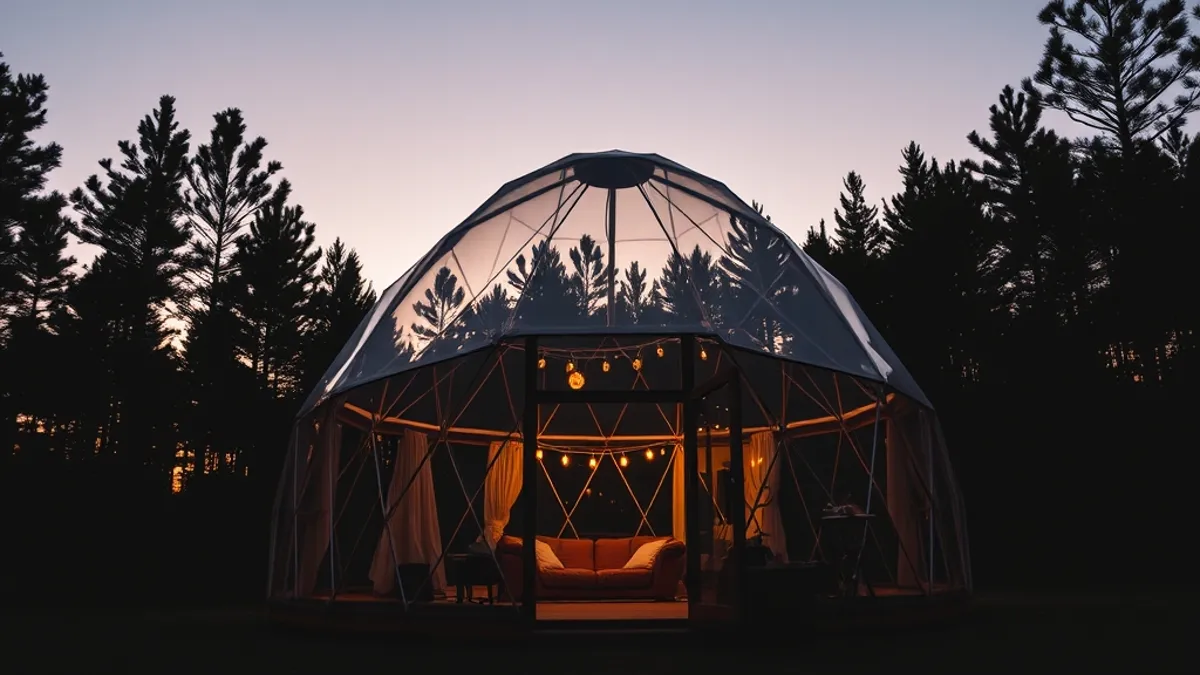
- Luxury domes and treehouses ($300-$600 per night): add premium amenities such as panoramic windows, hot tubs, wood stoves and designer furnishings.
- Ultra-luxury resorts ($600-$1,000+ per night): deliver full-service dining, spa access and staff on site, closer to an all-inclusive hotel experience than camping.
Keep in mind these are typical ranges, and individual sites vary quite a bit within each tier. A basic tent at a popular destination can cost more than a well-equipped yurt in a quiet rural area, so always compare what’s actually included before booking. Check the listing for bathroom access, bedding and cooking facilities, and read recent guest reviews to see whether the site delivers what it promises.
What Factors Drive Glamping Prices Up or Down?
Two identical safari tents can sit an hour apart and differ in price by a third. Location is the biggest reason: sites near national parks or coastlines command 20-40% premiums over rural inland sites, because they’re selling convenience and views as much as the tent itself. If you’re willing to stay a short drive away from the headline attraction, the same style of accommodation often costs noticeably less.
Season matters just as much
Peak season rates in June-August run 30-50% higher than the shoulder months of May or September. Demand drives this: families travel during school holidays, and operators know the same tent fills easily in July. The weather in those shoulder weeks is often nearly as good, which is why many experienced glampers treat the calendar as their first budget lever. Weekend nights also cost more than weekdays at most sites, regardless of the season, so a midweek stay can soften the price even in busy months.
Amenities and stay type
What’s inside the unit changes the price too. Private bathrooms, hot tubs and heating push a unit into a higher bracket than a bare-bones version of the same accommodation. And at the same site, domes and treehouses typically cost more than canvas tents, because they cost the operator more to build and maintain. If you’re flexible on the unit type, the canvas option is usually the value pick. Before booking, check exactly which amenities are included, since a cheaper tent without heating can end up needing paid add-ons on site.
Hidden Fees That Change Your Glamping Budget
The nightly rate you see on a listing is rarely the amount you actually pay. Most platforms and individual sites add fees at checkout, and on a short two-night stay these extras can add a noticeable chunk to your total. Always expand the full price breakdown before you book, and check the final amount on the payment screen rather than the headline rate. A few minutes of checking now saves an unpleasant surprise later.
The most common extras are cleaning and service fees, which add $30-$100 per booking on many platforms. Pet-friendly sites often charge for animals, and on-site extras like firewood or kayak rentals are priced per item. Minimum-stay rules can also quietly inflate your bill: many sites require 2-3 nights on weekends, so a one-night plan may not be possible at all. Here’s what to watch for:
- Cleaning and service fees: charged per booking rather than per night, so they hit short stays hardest. They are sometimes lower if you book direct with the site, so it pays to compare.
- Pet fees: typically charged per stay at pet-friendly sites, sometimes per pet, so traveling with two dogs can double the charge. Ask about size limits too, as some sites restrict large breeds.
- Firewood, activity add-ons and equipment rentals: usually priced per item, and they add up fast if you buy bundles of wood every evening. Bringing your own firewood or checking local rules first can help.
- Minimum-stay requirements: 2-3 nights on weekends means your “cheap” Saturday night effectively costs two or three nights’ worth of accommodation. Midweek stays often come with fewer restrictions.
Factor these extras into your budget before comparing sites, because a slightly higher nightly rate with no cleaning fee can end up cheaper overall. Write down the true total for each option, including any add-ons you know you’ll use, and compare like with like. That final number, not the listing price, is what belongs in your trip budget.
How to Save Money When You Book Glamping
Glamping doesn’t have to blow your travel budget. The same tent that costs a fortune in July can be surprisingly affordable in late spring, and a few smart booking habits make a real difference. None of these tactics require cutting corners on comfort — they’re mostly about timing and knowing where the money actually goes. Here’s how to keep more of it in your pocket.
- Travel in shoulder season. May and September offer the best value, with rates often dramatically lower than peak summer prices. The weather is still pleasant in most regions, sites are quieter, and you get the same views without the crowds. If your dates are flexible, this single change is usually the biggest saving available.
- Book ahead, but at the right time. For summer dates, aim to book 2-3 months ahead, since popular sites fill up and last-minute summer availability tends to carry premium pricing. For shoulder-season trips, booking 3-4 weeks ahead is typically enough, and you may even find discounts as operators try to fill empty units.
- Pick self-catering sites. Full-service resorts bundle meals into the nightly rate, which adds a meaningful amount per person per day compared to cooking for yourself. Many glamping sites provide a fire pit, grill or basic kitchen, so bring groceries and you’ll eat well for a fraction of the cost.
- Compare weekday rates. Midweek nights often run noticeably cheaper than weekends at the same site. If you can take a Monday-to-Wednesday trip, you’ll save on the nightly rate and may also dodge minimum-stay requirements.
Stack two or three of these tactics together and the savings compound quickly. A midweek shoulder-season stay at a self-catering site can cost less than half of a peak-weekend booking at a resort, for essentially the same experience — same stars overhead, same campfire, same morning coffee with a view. Before you book, read the listing carefully so you know exactly what’s included, then check the current rates and fees directly with the operator, since these change from year to year.
Sample Glamping Budgets for Different Trip Styles
Numbers on a page only mean so much until you see them applied to a real trip. Below are four sample budgets that reflect the most common glamping styles, from a bare-bones solo escape to a full-service splurge. Each one assumes a different travel style, so use the scenario closest to your own plans as a starting point. Treat them as planning baselines rather than quotes, since rates vary widely by region, operator and season. A safari tent in a popular coastal area will rarely cost the same as the same tent an hour inland. Before you book, always check what the rate actually includes: bedding, towels, kitchen access and bathroom facilities can differ from site to site, and some platforms show a low nightly price that climbs once fees are added. Reading the full cost breakdown before you pay is the single easiest way to avoid a budget blowout.
- Couples weekend, mid-range safari tent: Expect $300-$600 for two nights, plus $30-$100 in cleaning or service fees. Pack a cooler with breakfast supplies and plan one dinner out, which keeps food costs separate from the booking total.
- Family of four, luxury dome, three nights: A realistic range is $900-$1,800 for the stay, with meals on top. Domes usually sleep four comfortably, but confirm the bed configuration, because some sites charge extra for linens or additional sleeping pads for kids.
- Budget solo trip, bell tent, two nights: Around $160-$300 with self-catering. Shared facilities are the norm at this price point, so bring a headlamp, towel and flip-flops for communal bathrooms, and check whether bedding is provided.
- Splurge resort stay, two nights: Figure $1,200-$2,000 with dining included. At this level, ask exactly what the rate covers, since some resorts include guided activities, spa access or drinks while others bill them as add-ons.
Notice how fees and food can swing these totals by 10-20%. Cleaning charges in particular show up late in the booking process, so add them to your total before deciding a site fits your budget. Build both fees and meals into your planning from the start and there won’t be any unpleasant surprises at checkout. If a scenario here runs higher than expected, shifting your dates or choosing a simpler stay type usually brings the number back in line.
Is Glamping Worth the Cost Compared to Hotels?
Is glamping actually cheaper than a hotel? The honest answer is that it depends on what you’re comparing and how you like to travel. A mid-range safari tent or yurt often matches mid-tier hotel rates in the same area, but you’re getting something a hotel can’t offer: outdoor space, starry skies and a setting that feels like part of the trip itself rather than just a place to sleep.
When glamping clearly wins
Self-catering glamping undercuts comparable boutique hotels in many regions. If you’re happy cooking your own meals and the site has decent facilities, the value is hard to beat, especially for longer stays where the nightly savings add up. Families feel this the most: one spacious tent with room for everyone often costs less than booking two hotel rooms, and kids get a campfire instead of a hallway.
When a hotel might be the smarter pick
Full-service glamping resorts can exceed hotel prices, sometimes significantly. Whether that’s worth it comes down to what’s bundled in: included meals, guided activities and spa access can justify the premium if you’d spend on those things anyway. But if you’d rather explore local restaurants and skip the extras, you may pay resort prices for services you never use.
A simple way to decide: price the hotel alternative, then add the cost of anything the glamping rate includes that you’d otherwise buy. If the totals come out close, choose based on the experience you want, not the price tag.
Final Thoughts on Planning Your Glamping Budget
Glamping can look affordable in photos, but the reality is that prices swing from around $80 per night for a simple tent to well over $1,000 at a full-service luxury resort. That is why a clear budget breakdown matters before you book your first upscale camping trip. The three biggest levers are season, stay type and hidden fees. A mid-range safari tent in May will cost far less than the same tent in July once cleaning fees and weekend minimums are added on top.
If you remember one thing, make it this: booking early and traveling in shoulder season delivers the largest savings of anything else you can do. Check the total price, not just the nightly rate, and match the comfort level to the trip you actually want. Have a glamping trip planned or a money-saving tip of your own? Leave a comment or share this article.