If you have ever priced the same safari tent in May and again in July, you already know the problem: glamping across Europe can cost wildly different amounts depending on the month you pick. Add in unpredictable weather, from Mediterranean warmth to Alpine frost, and choosing a date becomes just as important as choosing a site.
This guide breaks down when to book by season. We look at summer peak months, the shoulder-season windows that offer the best value, and the southern spots where winter glamping actually works. You will also find practical booking timelines for each season and advice on matching the right month to your glamping style, whether that is a beachfront dome or a forest lodge. By the end, you should know exactly which window fits your budget and your plans.
Why Timing Matters for Glamping Across Europe
Most travelers spend hours comparing tent types, dome sizes and lodge layouts, then pick a date almost at random. That is backwards. The season you choose drives the price far more than the accommodation itself, and it shapes the whole experience of the trip.
The clearest example is money. Shoulder-season rates are often 20-40% lower than July and August prices for the exact same tent on the exact same site. That difference can cover flights, a rental car or several nice dinners.
Weather changes everything
Weather swings just as dramatically. Mediterranean warmth in May can feel perfect for sleeping under canvas, while the same region in October brings cooler nights and shorter days. Head to the Alps and the contrast is sharper still: a site that feels lush and mild in summer can see frost by mid-autumn. The same site can feel like two different trips depending on when you arrive.
Availability is the hidden constraint
Price and weather are visible on any booking page, but availability is the constraint that sneaks up on people. Weekend summer slots in popular regions often sell out 6+ months in advance, especially in coastal areas and near national parks. If you have your heart set on a specific site and a specific weekend, waiting usually means settling for a weekday, a lesser pitch or a different region entirely. Timing matters on all three fronts: what you pay, what you feel and what is even left to book.
Summer: Peak Season for Glamping Across Europe
June to August is peak season in most of Europe, and it shows in every part of the glamping experience. Nights are at their warmest, sites run their full calendar of activities, and every facility from pools to restaurants is open. For many travelers this is exactly what they want from a night under canvas.
Where summer makes the most sense
Peak season is best suited to Alpine, Nordic and northern coastal sites, whose short season runs roughly late May to early October. In these regions, summer is not just the best time to go, it is practically the only time the site is open at all. A dome in the mountains or a cabin on a northern shore delivers its full experience only in these months, so paying peak rates is often simply the cost of access. If coastal glamping appeals to you, our article on seaside retreats with stunning ocean views is a good place to start comparing options.
What to expect and how to book
Expect top prices and crowds. Popular sites fill their prime pitches first, and shared facilities like showers, pools and dining areas feel noticeably busier in July and August than at any other time of year. Families with school-age children often have no choice but to travel in these weeks, which is part of why demand runs so high.
The practical answer is to book 3-6 months ahead to secure prime summer weekends. Leaving it later usually means choosing between leftover dates or less desirable sites. If your dates are fixed and your target site is popular, treat booking like a task with a deadline rather than something you will get around to.
Shoulder Season: The Best Value Months
The months on either side of summer are where smart glampers find the best deals. May to early June and September to mid-October offer mild weather with noticeably lower rates than July and August, often for identical tents and identical views. Site owners would rather fill a pitch at a discount than leave it empty, and that flexibility flows straight to your wallet.
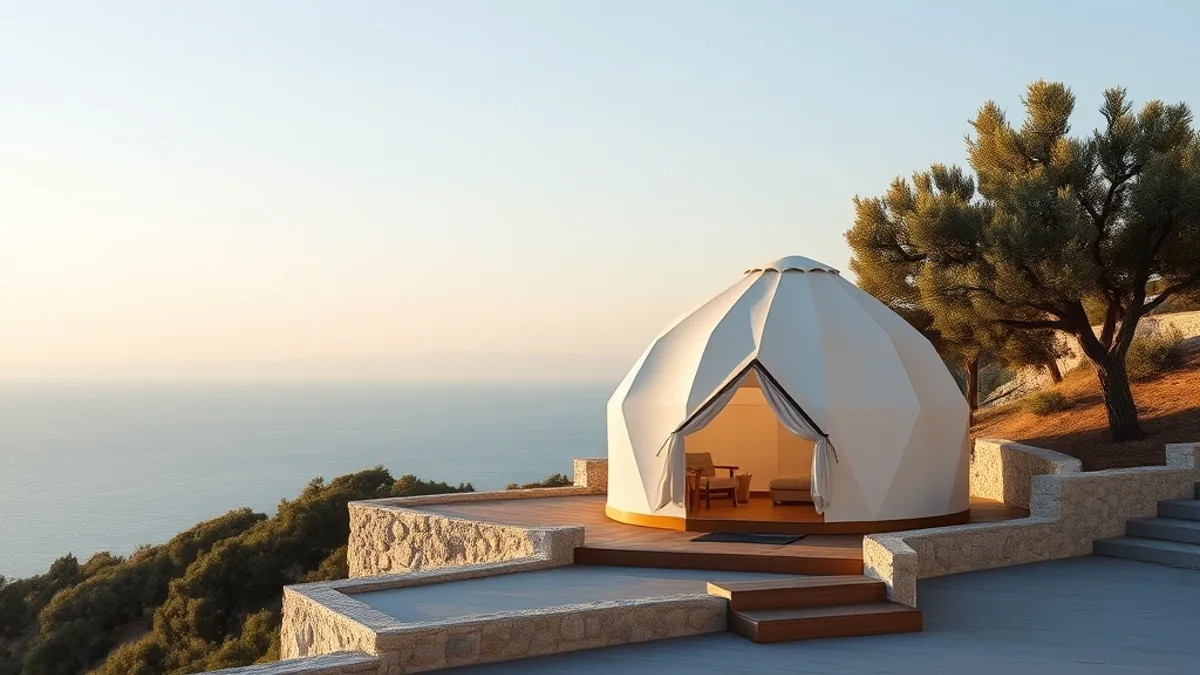
The Mediterranean coast stays comfortable from May through October, making September ideal for seafront sites. The sea has had all summer to warm up, the worst heat has passed, and evenings are still mild enough for dinner outside your tent. If your dream glamping trip involves waking up a few steps from the water, September delivers the experience at a gentler price.
Fewer crowds mean easier access to hiking trails, beaches and on-site facilities. You are not queuing for the shower block or fighting for a lounger, and trails near popular sites feel calm rather than congested. A few specific advantages of shoulder-season travel:
- Better pitch selection: with fewer bookings competing for the same dates, you can often request specific pitches, such as shaded spots or those closest to the sea, that would be gone months earlier in summer.
- More flexible arrival and departure days: sites are more willing to accommodate midweek starts, shorter stays or one-night bookings that they would rarely accept during peak weeks.
- Quieter wildlife and scenery: popular walking routes and viewpoint areas near glamping sites see far less foot traffic, so early-morning hikes feel genuinely peaceful.
- Easier parking and access: on-site amenities, small village restaurants and local beaches near your site are all less pressured, which matters most at smaller coastal locations with limited space.
For budget travelers who value good weather as much as good prices, the shoulder season is the sweet spot. You give up a little warmth at night and accept slightly shorter days, and in exchange you pay significantly less while sharing the site with far fewer people.
Winter Glamping: Where Europe Stays Warm
When the cold sets in across most of Europe, glamping does not have to end. It simply moves south. Winter glamping works mainly in southern Spain, Portugal, Greece and the Canary Islands, where daytime temperatures stay mild enough to enjoy a dome or lodge without shivering through the night. These regions keep a surprising number of sites open while most European operators pack away their tents until spring.
The key word here is insulated. Standard safari tents are usually closed off-season because canvas offers little protection against cold nights and damp air. What you want instead is a proper winterized structure: an insulated geodesic dome, a wooden lodge or a cabin-style unit with real heating. Before booking, ask the site directly whether the unit has a heater or wood stove, how it is powered, and whether it stays warm overnight. A pretty dome in a brochure means little if you spend the night wearing every layer you packed.
What to expect from prices and daylight
The good news is that prices drop well below summer levels, so a southern winter escape can cost a fraction of the same trip in July. The trade-off is daylight. Winter days are short, especially compared to long summer evenings, so plan your activities around midday. Save hiking, sightseeing and beach walks for the brightest hours, and keep evenings for the wood stove, a good book and a slow dinner. Check each site’s winter opening dates and heating arrangements before you commit, since they vary from operator to operator.
How Far Ahead to Book by Season
Glamping is not the kind of trip you can always book the week before. The right lead time depends heavily on when you want to travel, and getting it wrong usually means paying more or settling for a leftover pitch. Here is a simple timeline to work from, season by season.
- Peak summer trips: reserve well in advance. June to August is when demand is highest and calendars fill fastest. The standard advice is to book several months ahead, which gives you a real choice of units, views and pitch positions rather than whatever is left.
- Popular weekend slots: aim for 6+ months ahead. Weekend summer dates in well-known regions often sell out more than half a year in advance. If your heart is set on a specific site or a Friday-to-Sunday stay in July or August, mark the opening of the booking calendar and reserve as early as possible.
- Shoulder season: 1-3 months ahead is usually enough. In the milder spring and autumn windows, availability is far more relaxed and rates sit well below summer levels. Booking a few months out still gives you the better pick of pitches, but you can often plan closer to departure without much penalty.
- Winter southern escapes: 2-3 months ahead. Winter sites in southern Spain, Portugal, Greece and the Canary Islands see lighter demand overall, so a couple of months of lead time typically works well.
- Christmas and New Year dates: book earlier. The festive period is the one winter exception, with many travelers competing for the same heated domes and lodges. Treat those dates like a peak-season booking and reserve as soon as the site opens its calendar.
One last tip: booking policies vary between operators, so check cancellation terms before you pay a deposit. A flexible rate can make an early reservation far less risky, especially for long lead times. If your dates are set in stone, an early booking with free cancellation is usually the safest combination; if your dates are loose, waiting for a shoulder-season deal can save you money without costing you the trip.
Matching the Season to Your Glamping Style
The best season for a glamping trip depends less on the calendar and more on what kind of stay you are after. A seafront dome and a forest lodge in the mountains are almost two different hobbies, and they peak at different times of year. Matching your style to the right window is what turns a good trip into a great one.
Beach and coastal domes pair best with the long Mediterranean season, when the coast stays comfortable for sleeping, swimming and long evenings outside. Forest and mountain lodges, on the other hand, shine in the short Alpine and Nordic window, when trails are open and nights are mild enough for canvas and timber structures.
- Beach lovers should target the edges of the Mediterranean season. Early June and mid-September often deliver warm sea and quiet sand, while July and August bring peak crowds and peak prices to the same shoreline.
- Hikers and mountain fans should build around the short northern season. In the Alps and the Nordic countries, sites typically open only for a few summer months, so mid-season weeks offer the most reliable trail access.
- Budget travelers get the most value at the start and end of shoulder season. These stretches combine good weather with noticeably lower rates than peak summer, meaning the same dome or lodge can cost far less with barely any loss of comfort.
- Facility-focused travelers benefit from quieter months too. With fewer guests on site, shared kitchens, pools and bathrooms are less crowded, and staff have more time to help with local tips and arrangements.
Whichever style you choose, let the site type decide the month rather than the other way around. A coastal dome booked for the right window feels like a bargain; the same dome in the wrong season can feel like a compromise.
Planning Your European Glamping Calendar
So when is glamping across Europe actually worth booking? The short answer: match the month to the map. Summer suits northern and Alpine sites, shoulder season suits the Mediterranean, and winter suits the far south, from southern Spain to the Canary Islands. Get the pairing right and the weather works with you instead of against you.
Timing your booking matters just as much. Booking 3-6 months ahead secures peak summer dates, while flexible planners who travel in the quieter months can lock in noticeably lower rates than the high-season crowd pays. Choosing the right window turns the same glamping stay into a very different trip. If you have a favorite region or a booking tip of your own, leave a comment or share this article.