The hush just before nightfall is when a forest reveals its most intimate theater: leaves silvered by the last light, birds braiding the day’s final notes, and a veranda that seems to float between canopy and sky. Forest Havens with Twilight Glow Verandas celebrates that threshold hour. Here, architecture is tuned to the soft luminosity of dusk—wide planked decks burnished with amber oils, lantern sconces with dimmable halos, and railings that frame a tapestry of moss, cedar, and drifting mist. It’s not simply a view; it’s a tempo. As the forest slows, the veranda becomes a private proscenium for candlelit suppers, hushed conversations, and the quiet luxury of doing nothing while twilight lingers a little longer than it should.
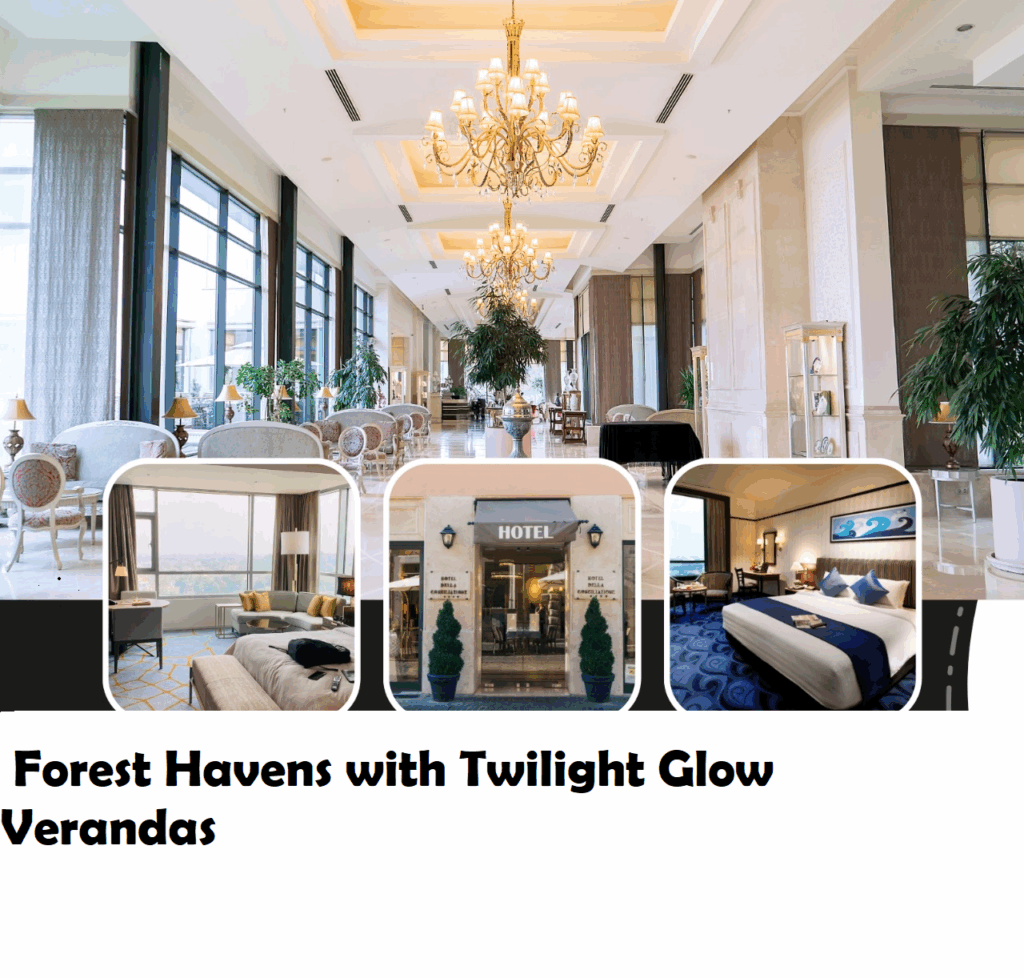
Moss-Cedar Verandas: Where Dusk Breathes
A great veranda understands restraint. Think knotless cedar under bare feet, hidden drainage that keeps boards dry after a quick mountain shower, and low, layered lighting—pendants at eye level, floor washes at ankle height—that respects the forest’s nocturne. Furnishings are tactile rather than loud: linen sling chairs, woven rattan, a wool throw that smells faintly of woodsmoke. The experience is choreographed to invite you outside the moment the sky warms into copper. You’ll notice how the breeze threads through understory ferns, how resin rises from sun-touched bark, and how conversation naturally drops into whispers, as if the trees were part of the audience.
Firefly Lines & Lantern Ledges
As evening deepens, the veranda’s silhouette sharpens. Discreet lantern ledges—shelves carved into columns, tucked beneath eaves—scatter points of light that never glare. If you’re lucky enough to visit during firefly season, the design lets bioluminescence do most of the work: dim your lamps, let darkness bloom, and watch a pointillist ballet stitch the understory. A narrow balustrade doubles as a tasting rail for forest-driven cocktails—pine and citrus highballs, fig-leaf spritzes, smoky lapsang infusions—poured in thin crystal that catches the last ember of daylight. It’s spectacle, yes, but intimate; the kind you share with one other person and remember for a very long time.
Rain-Glossed Timber & Tea at Blue Hour
Twilight in the rain is its own ceremony. Timbers gleam like lacquer; the scent of petrichor rises; roofs hum with a soft percussive rhythm. The best verandas anticipate this mood with under-eave heaters, reversible cushions, and teak trays set for tea at blue hour. Sip roasted oolong, listen to drops fade, and read the forest’s reflections in darkened glass. This is where a soaking tub—cedar or stone—makes quiet sense: positioned so steam lifts into the canopy without stealing the view. You soak, clouds move, and the veranda’s glow mirrors the gentleness of an evening that refuses to hurry.
Stargazer Corners Above a Forest Sea
When night finally tips in, the veranda pivots from twilight lounge to stargazer’s perch. Designers who understand the drama keep the scene simple: one dim lamp, a wool rug, and a chaise angled toward a slice of sky. In high-canopy regions, stars appear in ragged windows between crowns; in lower forests, the whole dome arrives at once. Either way, the veranda’s slow light—warm, never white—preserves the night’s integrity. You feel elevated yet grounded, suspended above a forest sea that rustles, chirps, and exhales.
Q&A: Planning Your Stay
What makes a “twilight glow” veranda special?
It’s the interplay of light, material, and horizon. Expect warm color temperatures (around 2200–2700K), dimmable fixtures, and finishes that respond to dusk—oiled wood, matte metal, nubby textiles. The design should frame, not compete with, the forest’s evening performance.
When is the best time to visit?
Shoulder seasons are magic: late spring and early autumn tend to deliver cooler evenings, clearer skies, and richer scents. In tropical forests, aim for the dry months when twilight is crisp and bugs are fewer.
What should I ask the concierge before booking?
Request west-facing verandas for longer glow, confirm dimmable lighting, ask about firefly or star visibility, and check if your veranda includes heating, a soaking tub, or a private dining setup. If you’re a light sleeper, ask about nighttime wildlife and how sound carries across the deck.
Which luxury hotels offer similar veranda experiences?
- Aman Kyoto (Japan) — Forest-lined verandas that turn dusk into a tea ceremony moment.
- Alila Ubud (Bali, Indonesia) — Jungle-edge decks where cicadas rise as lanterns warm.
- Four Seasons Tented Camp Golden Triangle (Thailand) — Elevated platforms overlooking bamboo and river bends.
- Forestis Dolomites (Italy) — Sleek timber loggias facing alpine fir and a star-bright sky.
- One&Only Nyungwe House (Rwanda) — Tea-forest verandas with long horizons and fireplace glow.
- Shinta Mani Wild – Bensley Collection (Cambodia) — Canopy-level terraces with the drama of river and rainforest.
Any essentials I shouldn’t forget?
A light sweater, soft-soled slippers, a compact binocular for twilight birding, and a notebook—ideas arrive easily when the forest goes quiet.
Conclusion: Where Exclusivity Meets Quiet Light
Forest Havens with Twilight Glow Verandas are less about amenities than about calibration—the art of matching human rhythm to the forest’s slow fade. You’re not merely staying in a room with a view; you’re inhabiting the hour when the day sighs into night and everything gentle becomes visible. The reward is exclusivity that doesn’t shout: a private stage for lantern light and leaf-shadow, a seat at the edge of the wild, and the rare privilege of feeling time stretch—amber, tender, and entirely yours.